Your lesson companion
From first lesson
to test ready.
Revisit a skill before your lesson, understand the routine and bring your questions to your next drive with Jobin.
For automatic pupils in Chelmsford. Read while parked or at home; practise with your instructor or a suitable supervising driver.
First lessons
Get comfortable with the car and build safe habits.
Cockpit checks
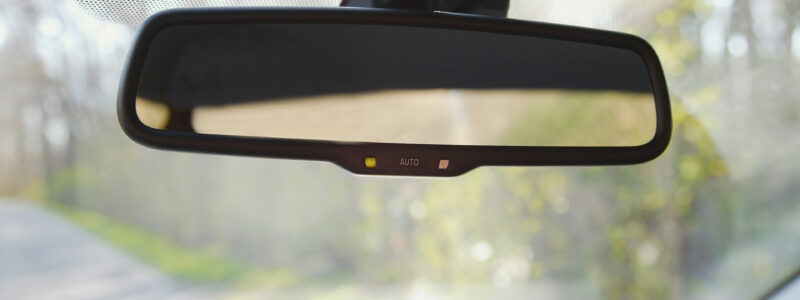
Set yourself up before every drive. A comfortable driving position makes observation and control easier.
Practise the skill
- Check the doors are secure. Adjust your seat and steering so you can reach the controls comfortably.
- Set the head restraint and fasten your seat belt. Adjust the mirrors after setting your seat.
- Locate the lights, indicators, wipers and demisters while parked.
Using the previous driver’s seat and mirror settings.
Check your understanding
When should you adjust your mirrors?
Show explanation
After you have set your driving position, before moving away.
Automatic controls: P, R, N and D
Learn the controls in your actual tuition car with Jobin. Selector and parking-brake operation vary between cars.
Practise the skill
- P is Park, R is Reverse, N is Neutral and D is Drive. Use your right foot for the accelerator and footbrake during normal tuition.
- Keep the footbrake pressed when selecting a driving mode. Stop fully before changing between forward and reverse or selecting Park.
- Practise gentle pedal pressure. Ask Jobin to demonstrate creep, regenerative braking and Auto Hold if fitted; never assume a feature will hold the car.
Looking down at the selector while the car is moving.
Check your understanding
Does an automatic car mean you can rely on it to stop itself?
Show explanation
No. You remain responsible for observation, speed and braking. Learn the car’s behaviour with your instructor.
Blind spots
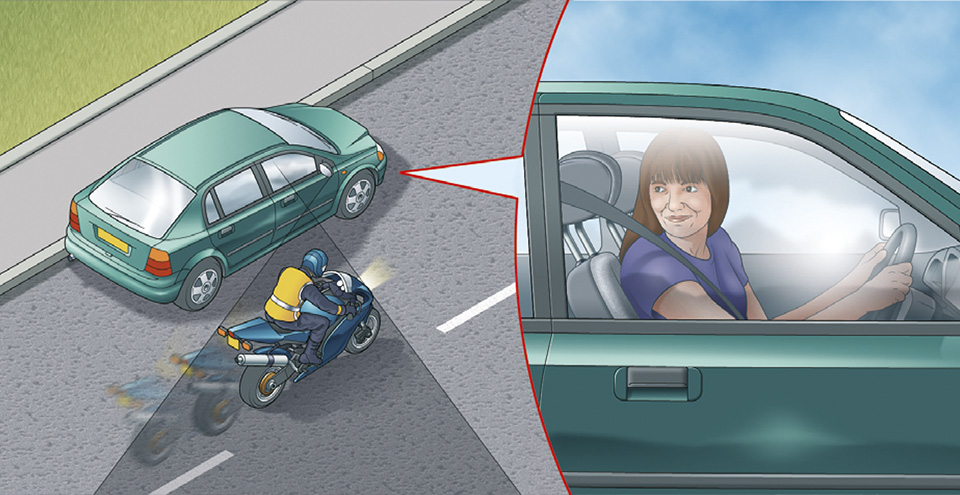
Mirrors cannot show every area around your car. A person or vehicle may be beside you but outside the mirror view.
Practise the skill
- Before moving off, check mirrors and look around into the blind spots.
- Signal if needed, make a final check and move only when safe.
- When changing lanes, check the relevant blind spot as needed without losing awareness ahead.
Treating a clear mirror or a sensor warning system as proof that the space is clear.
Check your understanding
Your mirror looks clear before moving off. Is that enough?
Show explanation
No. Check the areas the mirrors cannot show and reassess before moving.
Moving away and stopping
Build smooth control on quiet roads before adding more complex situations.
Practise the skill
- Prepare the car, observe around you and choose a safe moment to move.
- Build speed progressively and steer accurately. For stopping, choose a safe, legal place and plan early.
- Check mirrors, signal where useful, brake smoothly and secure the stationary car using the method taught for your vehicle.
Rushing because another driver is waiting.
Check your understanding
What matters more: moving quickly or choosing a safe moment?
Show explanation
A safe moment. Keep observing and move when you can do so without creating danger.
Road routines
Read the road, plan early and give yourself time.
MSPSL: Mirrors, Signal, Position, Speed, Look
MSPSL expands the Mirrors–Signal–Manoeuvre routine. It is a planning aid, not a one-off checklist: keep observing throughout.
Practise the skill
- Mirrors — understand traffic behind and beside you before changing speed or direction.
- Signal — communicate in good time when needed, without misleading anyone.
- Position — choose a safe road position or lane using signs and markings.
- Speed — adjust early to the view, conditions and manoeuvre.
- Look — assess the whole situation, decide whether it is safe and keep checking.
Finishing the routine mechanically without reacting to a new hazard.
Check your understanding
A pedestrian appears after your first look. Do you continue because you completed MSPSL?
Show explanation
No. Reassess and respond safely. Observation continues throughout the manoeuvre.
Junction observation
Find a useful view before deciding to emerge. A quick head movement is not the same as seeing and judging traffic.
Practise the skill
- Approach slowly enough to assess visibility. Obstructions may hide cyclists or motorcycles.
- Look both ways and ahead; recheck as the view changes. Right–left–right can help at a simple junction, but is not a complete scan for every layout.
- Stop at STOP lines. Give way as required and emerge only into a safe gap.
Trusting an approaching vehicle’s indicator without checking what it actually does.
Check your understanding
A parked van blocks your view. What should change?
Show explanation
Your approach and observation need more care. Be ready to stop; under instruction, move cautiously only when safe to improve your view, then reassess.
Pedestrians and crossings
Make people on foot part of your junction observations, including those waiting near the kerb.
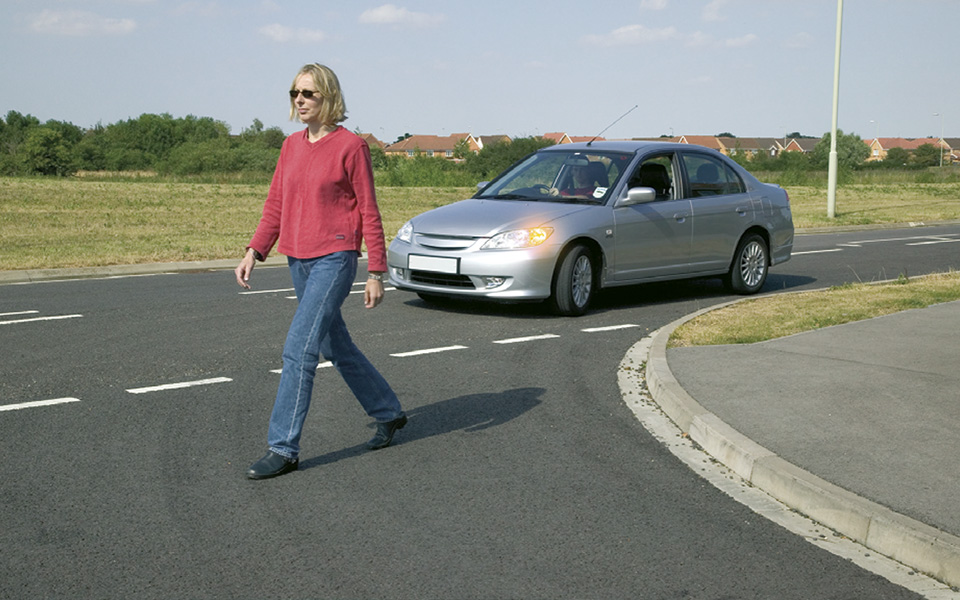
Practise the skill
- Give way to pedestrians crossing or waiting to cross the road you are turning into or out of.
- At zebra crossings, be ready to stop for people waiting; you must give way once someone is on the crossing.
- Keep crossings clear and do not wave people across: another vehicle may be approaching.
Looking only for cars and missing a person near the corner.
Check your understanding
Someone is waiting to cross the side road you plan to turn into. What should you do?
Show explanation
Give way, checking the surrounding traffic and making a safe, controlled response.
Speed, following distance and anticipation
A speed limit is a maximum, not a target. Leave enough room to respond to what you can see—and what might be hidden.
Practise the skill
- Choose a speed that lets you stop within the clear distance you can see.
- On faster roads, keep at least a two-second gap in dry conditions; at least double it in the wet and allow up to ten times more on ice.
- Look well ahead for brake lights, bends, parked vehicles and changing traffic. Ease off early rather than braking late.
Keeping the same gap in rain as in dry weather.
Check your understanding
What should happen to your following gap when the road is wet?
Show explanation
Increase it to at least double the dry-road gap, and allow still more space when conditions require.
Building independence
Combine your routines with positioning, manoeuvres and changing conditions.
Roundabouts and lane discipline
Plan from the actual signs and markings. There is no single lane rule that fits every Chelmsford roundabout.
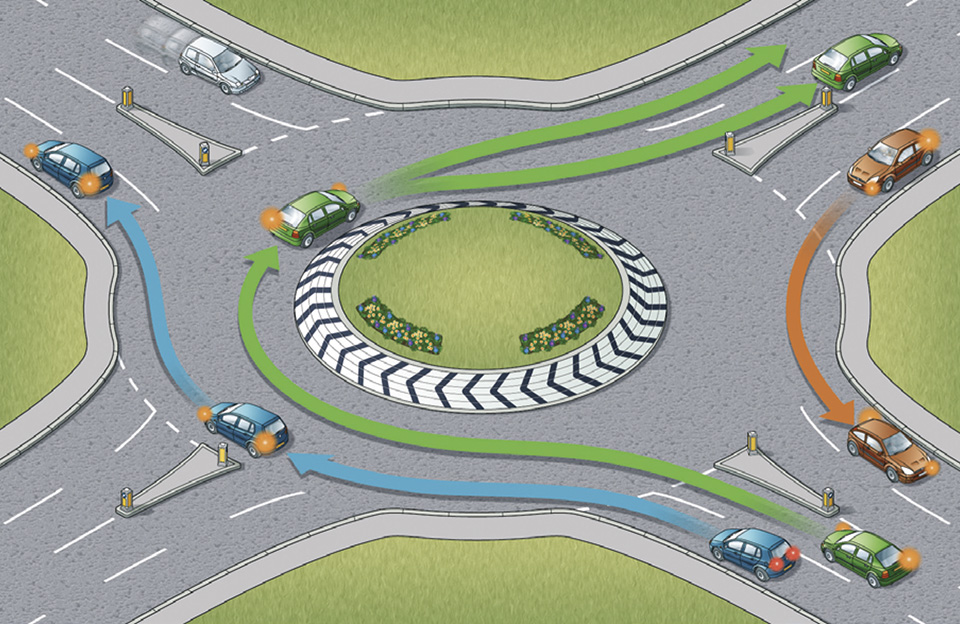
Practise the skill
- Identify your exit and choose the signed or marked approach lane early.
- Normally give way to traffic from the right, unless signs, markings or signals direct otherwise. Check ahead before moving.
- Follow your lane and signal appropriately. If positioned incorrectly, take a safe permitted exit rather than cutting across.
Assuming the right lane always leads to a particular exit.
Check your understanding
You realise you are in the wrong lane near an exit. What is the safe response?
Show explanation
Follow a safe legal route from your lane. Change lanes only if permitted and safe; otherwise take an alternative exit and replan.
Meeting traffic and passing parked cars
Look beyond an obstruction before committing to a narrow space.
Practise the skill
- Identify oncoming traffic and a suitable place to wait. Avoid squeezing through a gap you cannot judge safely.
- Leave space for opening doors and people stepping out. Reduce speed as clearance reduces.
- Avoid entering a narrow section unless you can complete it safely or wait without blocking others.
Following another car into a gap without making your own decision.
Check your understanding
The car ahead gets through a narrowing. Does that make it safe for you?
Show explanation
No. Assess your own gap, the approaching traffic and where you can wait.
Parking and reversing
Accurate steering matters, but awareness of people and traffic comes first.
Practise the skill
- Practise bay parking, parallel parking and pulling up on the right with Jobin.
- Check all around, reverse slowly and keep looking throughout. Watch the front of the car as it swings out.
- Use mirrors and cameras as aids, not your only view. Stop when someone enters the space you need or when you are unsure.
Fixating on one mirror or a parking reference point.
Check your understanding
A person walks behind you during a parking manoeuvre. What comes first?
Show explanation
Stop and let the situation become safe before continuing your observations and manoeuvre.
Faster roads, bends and poor weather
Adapt your plan to visibility, surface conditions and the speed of other traffic.
Practise the skill
- On dual carriageways, plan joining and lane changes early; observe and judge gaps carefully.
- Approach bends at a speed suited to the view. Stay alert for changing grip and hidden road users.
- In rain, darkness or glare, use suitable lights and demisters, reduce speed where needed and increase space.
Driving at a familiar speed when visibility or grip has changed.
Check your understanding
Why might a familiar bend need a slower approach tonight?
Show explanation
Darkness, wet surfaces or glare can reduce what you see and how much grip is available.
Getting test ready
Develop consistent, safe decisions without relying on prompts.
Independent driving and sat nav
Practise following directions while keeping your attention on the road.
Practise the skill
- Read road signs early and listen to directions without rushing.
- If you miss a direction, keep driving safely. Do not make a sudden lane change or turn.
- Ask for clarification if needed. A safe wrong turn is better than an unsafe correction.
Looking at the screen for too long or prioritising a route over safety.
Check your understanding
The sat nav says turn, but it is too late to do so safely. What now?
Show explanation
Continue safely and allow the route to be replanned.
“Show me, tell me” safety questions
Learn the checks on the car you will use, including the differences between electric and petrol cars.
Practise the skill
- Practise explaining tyre, light, brake and other applicable safety checks while parked.
- Locate washers, demisters, windows and lights so you can operate them confidently.
- During a “show me” task, maintain control and wait until it is safe to operate the control.
Memorising an answer without being able to find the control in your car.
Check your understanding
Should you look down and rush a control demonstration?
Show explanation
No. Keep driving safely and carry out the task when it is safe.
Mock tests and learning from mistakes
Use a mock test to identify what needs practice, not just to collect a result.
Practise the skill
- Practise a drive with less prompting and a clear debrief afterwards.
- Discuss decisions that affected safety, not just the number of faults.
- Agree one or two specific practice goals and repeat them in varied situations.
Booking the real test while still needing regular safety prompts.
Check your understanding
You passed one mock test but still need help at junctions. Are you automatically ready?
Show explanation
No. Look for consistent independent performance across situations and discuss readiness with Jobin.
Test-day preparation and confidence
Arrive prepared and focus on one safe decision at a time.
Practise the skill
- Check the official test instructions, required documents and arrangements for the car in advance.
- Know the main elements: eyesight, vehicle safety questions, general and independent driving, and a reversing exercise.
- Practise managing nerves and agree readiness with Jobin. If something goes wrong, refocus on the next safe action.
Assuming one small mistake means the test is over and losing concentration.
Check your understanding
What should you do after a mistake?
Show explanation
Stay calm, keep control and continue making safe decisions. Leave the assessment to the examiner.
Keep learning between lessons
These notes support your practical tuition. Being test ready means consistently driving safely and independently—not simply finishing a reading list.
Guidance checked 15 September 2026. Highway Code illustrations (Rules 159, 170 and 185) and cockpit photograph: Department for Transport / DVSA, © Crown copyright, used under the Open Government Licence v3.0. The roundabout illustration is generic; follow current local signs and markings.